Running a tight schedule with a small crew is one of the hardest parts of owning a service business. There's little room for error — one no-show, one miscommunication, or one traffic jam can throw off an entire day. Here are practical strategies that work for teams of 1 to 10 people.
Build Travel Time Into Every Job
The most common scheduling mistake is booking jobs back to back without accounting for travel. You end up perpetually late, your customers are annoyed, and your crew is stressed before they even walk through the door.
A simple rule: add a 15–20 minute buffer between jobs. If your jobs are geographically spread out, consider routing your crew so they move in one direction across town rather than zigzagging.
Modern scheduling tools can help you cluster jobs by neighborhood on the same day, which cuts drive time significantly over the course of a week.
Use a Shared Calendar Your Whole Team Can See
If the schedule only exists in your head or on your phone, you're the single point of failure. What happens when you're on a job yourself and someone on your crew needs to check where to go next?
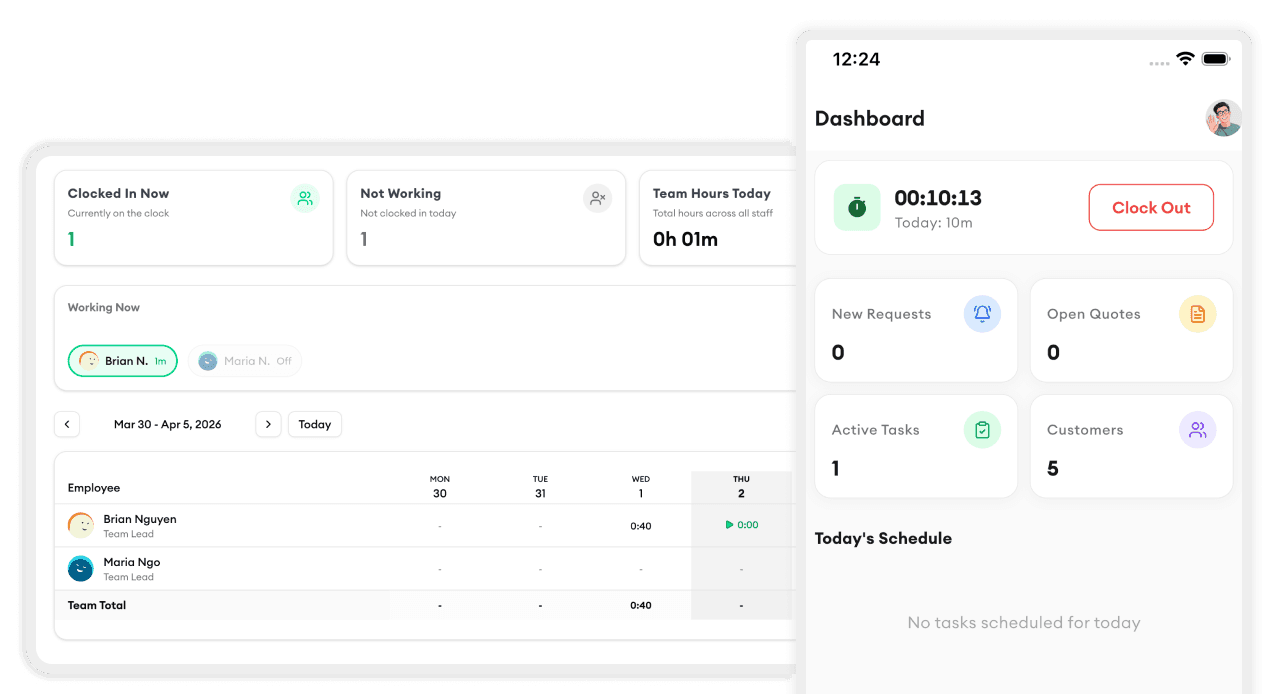
A shared digital calendar — whether it's Google Calendar, Homitask, or any other tool — means everyone sees the same information. Changes are reflected immediately. No more "but I thought you said 10am" conversations.
Set Reminders for Customers
Customer no-shows are expensive. You've blocked time, dispatched a crew, and now nobody's home.
Automated appointment reminders — sent 24 hours and 1 hour before a job — dramatically reduce no-shows. Most customers appreciate the reminder and will reschedule in advance if they forgot.
A simple SMS message ("Hi Sarah, your cleaning is tomorrow at 10am — reply to reschedule") costs almost nothing and saves you from wasted drive time.
Create Clear Job Notes
"Standard clean" means something different to every customer. One person expects the fridge cleaned. Another is horrified if you move anything on the counter. The only way your crew can meet expectations consistently is if job-specific notes are attached to every appointment.
Get in the habit of capturing:
- Access details (door code, where the key is hidden)
- Customer preferences ("always use unscented products")
- Quirks ("dog is friendly but barks a lot — don't ring doorbell")
- Scope notes ("focus on bathrooms and kitchen — skip the basement")
When this information lives in your scheduling system and your crew can read it before they arrive, you stop relying on verbal handoffs that get forgotten.
Review the Next Day's Schedule Every Evening
Take five minutes at the end of each workday to review tomorrow's jobs. Ask yourself:
- Is every job assigned to someone?
- Are travel times realistic?
- Are there any potential conflicts?
- Do any jobs have incomplete notes or missing customer info?
Catching problems the night before beats scrambling at 7am. It also means you can reach out to customers or reassign jobs before anyone has left the house.
Build In a Flex Slot
If you have 4+ crew members, try to leave one slot per day unbooked as a flex slot. This is your buffer for last-minute bookings, overrun jobs, or handling a callback when something didn't go right.
Teams that book themselves 100% solid are fragile. One thing goes wrong and the whole day falls apart. A flex slot gives you breathing room without leaving money on the table.
Good scheduling isn't magic — it's discipline and the right tools. Start with a shared calendar and job notes, build in travel time, and review the schedule nightly. You'll be surprised how much smoother your days feel.
Looking for a scheduling tool built specifically for small service teams? Try Homitask free for 14 days.